
This page contains affiliate links to Amazon. If you click through and make a purchase we may earn a small commission at no extra cost to you. Full disclosure policy →
Last updated: July 2026
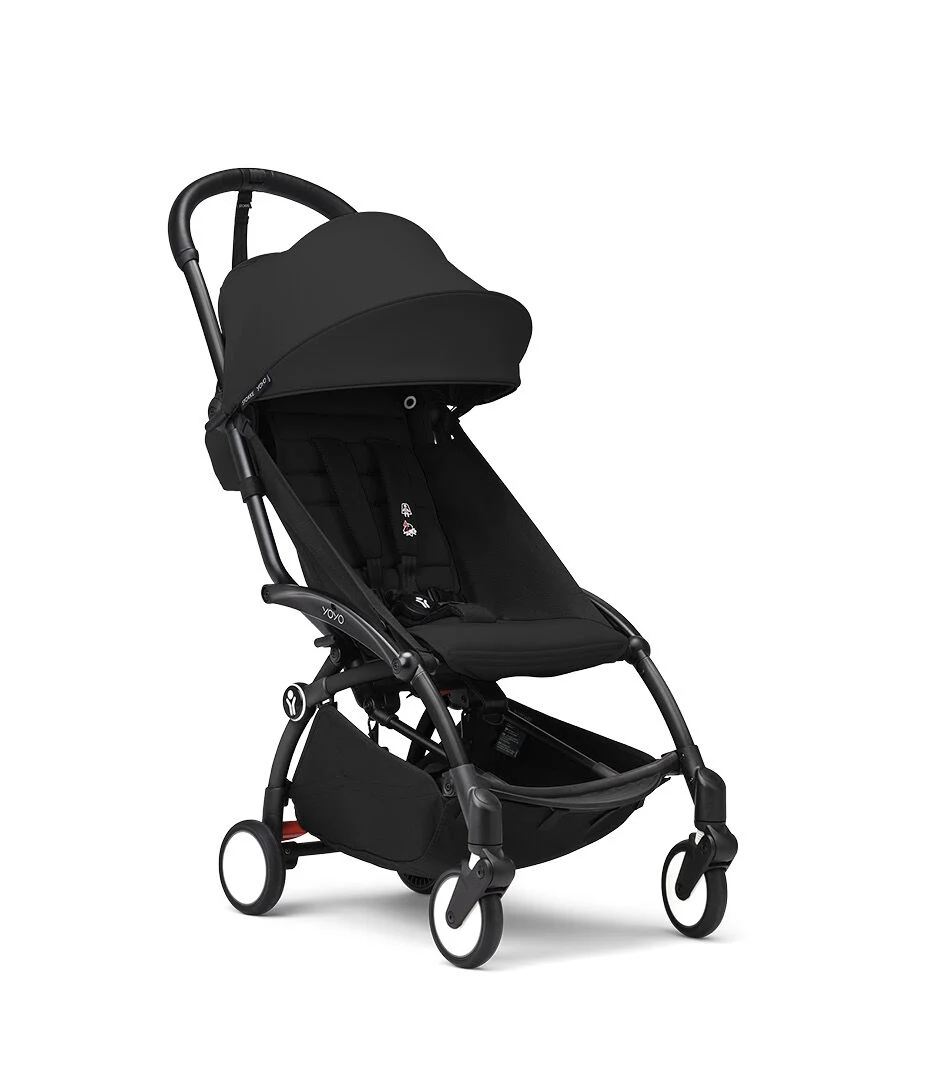
It’s one of the most common questions parents ask when they first encounter a Stokke pushchair: why does it cost so much? The YOYO³ frame starts at £400–£500. The Xplory X starts at over £1,000. At those prices, the question is entirely reasonable — and it deserves a straight answer rather than marketing copy.
The short answer: Stokke is expensive because of genuine engineering quality, Norwegian design heritage, and a brand philosophy that prioritises parent-child connection over cost efficiency. The longer answer is more nuanced — and includes one honest caveat that most Stokke marketing won’t tell you.
1. The engineering is genuinely premium
Every Stokke product examined at trade shows and in stores has immediately apparent premium materials and construction. The fabrics, frame, fixtures and finish feel like they’re built to last — because they are. The YOYO³’s screws-not-rivets construction is a specific engineering choice: it means the fabrics can be removed and washed, and the pushchair can be maintained and repaired over years of use rather than simply replaced. That’s not a cheap design decision. It’s an expensive one that pays off over time.
The long-term durability is confirmed by real use, not just showroom impressions. My daughter K has used her YOYO³ as her primary pushchair for daily public transport, urban and supermarket use over an extended period. It holds up. A pushchair that maintains its quality through daily use for two or three years represents better value than a cheaper pushchair that degrades after six months — even if the upfront price is higher.
2. The design philosophy costs money to execute
Stokke’s entire range is built around a single idea: elevate the child to promote eye contact and connection between parent and baby. That philosophy sounds simple. Executing it consistently across a range of pushchairs — from a 6.2kg compact to a full-size elevated flagship — requires significant design investment. The Xplory X’s elevated seat position, the YOYO³’s specific dimensions and weight target, the Stokke-wide approach to handle height and pushing posture — none of these emerge from a cheap design process.
Norwegian design heritage also commands a premium in the market, as it does across furniture, outdoor equipment and childcare products. Stokke’s reputation is built over decades of consistent quality — and maintaining that reputation has a cost that’s built into every product price.
3. The YOYO³ defined a category
The original Babyzen YOYO — now evolved into the YOYO³ following Stokke’s acquisition of Babyzen in 2021 — was one of the first compact pushchairs to fold to cabin baggage dimensions designed around IATA guidelines. It changed what travelling with a young child looked like. The reason airlines, competitors and parents now expect cabin-sized pushchairs as a category is largely because the original YOYO proved it could be done. Being first to solve a genuinely difficult engineering problem earns a price premium that later entrants to the same category don’t always justify.
The YOYO³ at 6.2kg and 52 × 44 × 18cm folded is still the benchmark in this category. Competitors have followed, but none has displaced it as the default recommendation for parents who fly regularly. That market position supports the price.
4. The honest caveat — accessories
Here’s the thing Stokke marketing won’t tell you: the frame price is just the start. The YOYO³ frame at £400–£500 doesn’t include the leg rest, rain cover, newborn pack, insect net, or car seat adaptors. The full setup often reaches £600 or more. If you want to use it from birth, the newborn pack is sold separately and adds further cost.
This is the most common source of buyer frustration with Stokke — not the quality of the product, but the gap between the frame price they budgeted for and the total cost they actually paid. Budget for the complete setup before committing to the frame price. The total cost of a properly equipped YOYO³ is the honest comparison point with rivals, not the frame price alone.
Is Stokke worth the money?
For the right parent, yes — genuinely. The YOYO³ is the pushchair I recommend more than any other on this site, and that recommendation is based on long-term daily use evidence rather than showroom impressions. If your life is urban, if you use public transport, if you fly with your child — the YOYO³ earns its price over time through durability, manoeuvrability and genuine travel utility.
The Xplory X is worth the money specifically for tall parents and those recovering from a C-section. For everyone else, the price is harder to justify — which is an honest assessment of a specialist pushchair, not a criticism of the quality.
Where Stokke is not worth the money: if you need all-terrain capability, if you walk mostly on rough ground, or if you’re buying the brand name rather than the specific things the pushchair does well. Premium price for the wrong pushchair is the most expensive mistake in this market.
💬 The honest summary
Stokke is expensive because the engineering is genuinely premium, the design philosophy is consistently executed, and the YOYO³ earned its market position by solving a real problem first. The honest caveat is the accessory cost trap — budget for the full setup, not just the frame. And if you’re not the specific buyer each Stokke model is designed for, the price isn’t justified regardless of the quality.
What are you actually paying for?
✓ You are paying for:
- Better engineering and materials
- Better long-term durability
- Better resale value
- Better urban manoeuvrability
- Proven cabin travel credentials
✗ You are not paying for:
- Accessories — these cost extra
- Off-road capability
- Better storage
- A one-handed fold
- A pushchair that suits every family
Related reading
- Stokke YOYO³ Review — is it worth it for your situation?
- Stokke Xplory X Review — the specialist case for the premium flagship
- Stokke Pushchairs — Hub & Buying Guide
- Buying a Secondhand Pushchair — a well-kept secondhand YOYO³ is one of the better buys on the market
About the author
Mark founded MyPushchair.co.uk in 2006 after struggling to find honest, straightforward pushchair advice as a new dad. With more than 30 years in the family travel and leisure industry — and after returning to relaunch the UK’s original independent pushchair review site — he continues to test products with one aim: helping parents buy the right pushchair the first time. Read the full story →
Have a question about whether Stokke is right for your situation? Get in touch — happy to help.