
This page contains affiliate links. If you click through and make a purchase we may earn a small commission at no extra cost to you. It does not affect our verdicts. Full disclosure policy →
First published: August 2026 · Last reviewed: October 2026 · Next scheduled review: April 2027 · Specs verified against manufacturer sites October 2026
The decision in one sentence
The Airo does 80% of what the Dragonfly does at around one-fifth of the price — and for most parents that arithmetic is the whole decision. The Dragonfly earns its premium only if Bugaboo build quality, the reversible seat, and class-leading fold matter enough to justify a £756 gap.
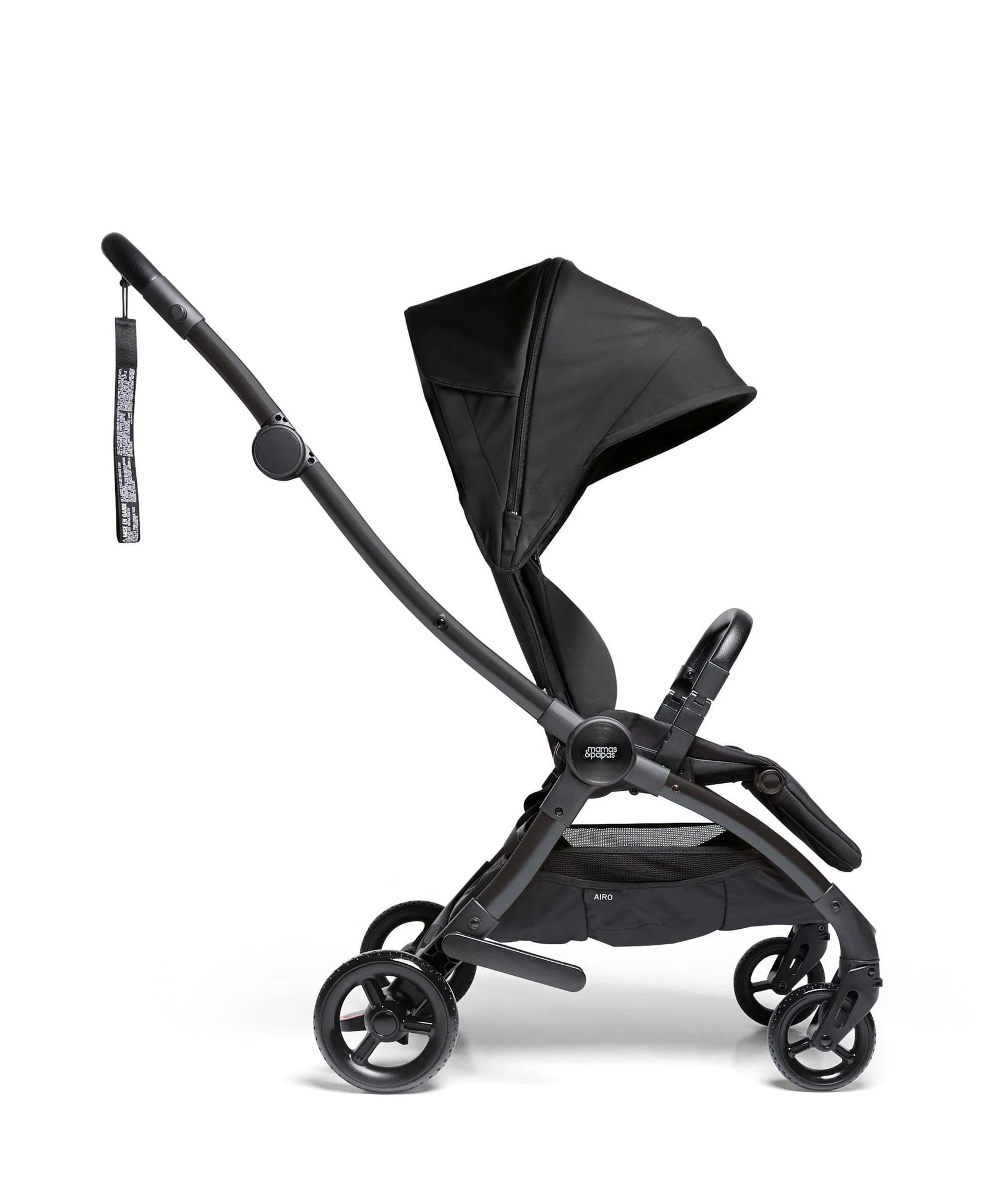
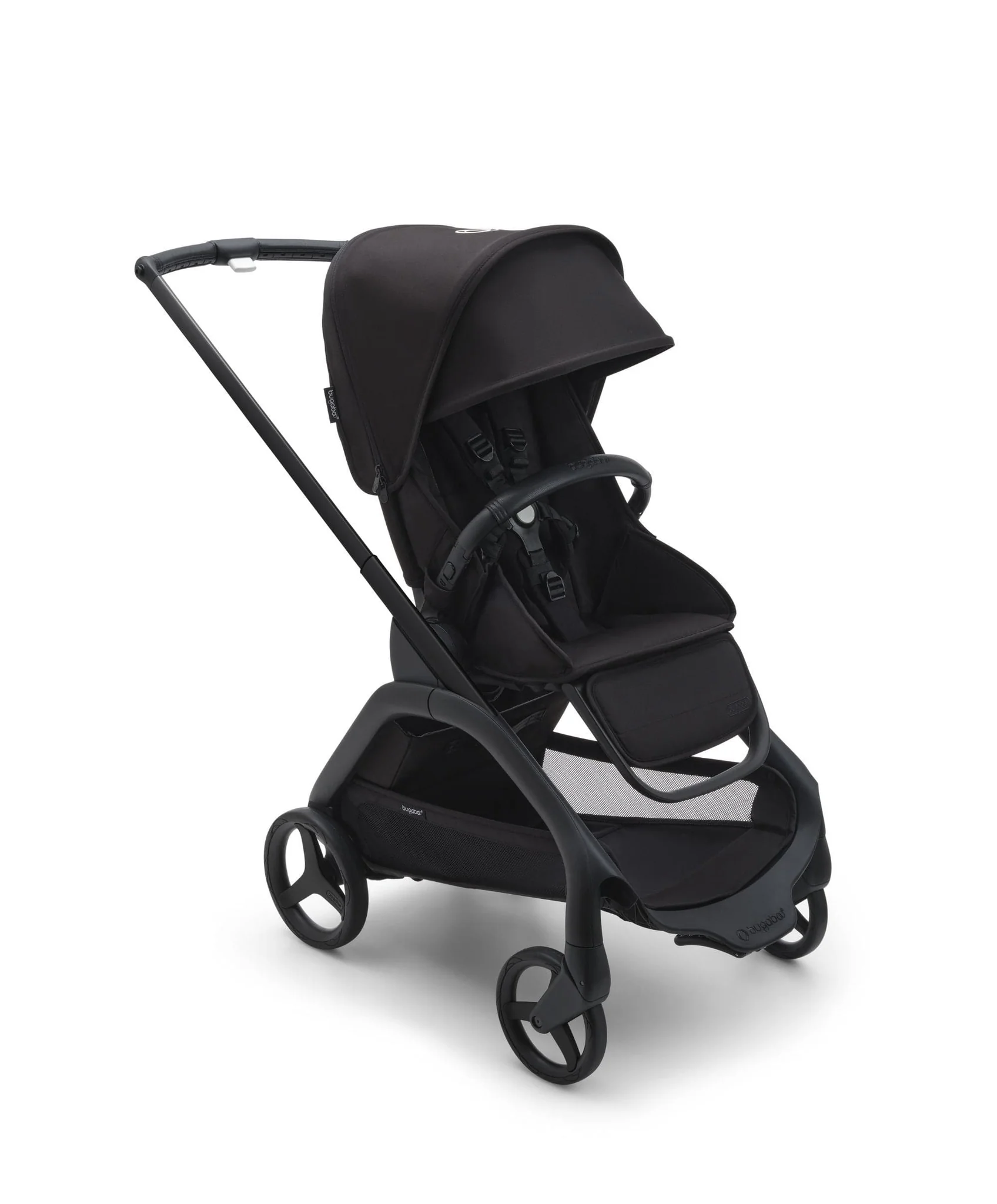
If you’re deciding between the Bugaboo Dragonfly and the Mamas & Papas Airo, you’re weighing two pushchairs that cover similar ground — both compact, both designed for urban use, both smooth-surface only — but separated by a £756 price gap. Understanding whether that gap is justified by what the Dragonfly adds is the whole comparison. I tested the Dragonfly at Disneyland Paris — Casey’s Corner during a parade wait, which is as close to a real city stress test as you can get — and the Airo hands-on with Janette at a local stockist. Both gave clear verdicts.
Verdict at a glance
Why trust this comparison?
Tested by: Mark — Dragonfly tested at Disneyland Paris, Casey’s Corner, Main Street USA, during a parade wait. Real-world crowd and urban surface testing. Airo tested hands-on at a local stockist with Janette contributing her assessment of the fold, seat fabric and build quality.
Evidence basis: Hands-on assessments in real-world conditions. Specs verified against bugaboo.com and mamasandpapas.com.
Conflict of interest: This page contains affiliate links. This does not affect our verdicts.
Head-to-head
← Swipe to see full specs on mobile
| Mamas & Papas Airo | Bugaboo Dragonfly | |
|---|---|---|
| Score | ✅ 8.5/10 — Best value | 7.5/10 |
| Price | ✅ £189 | From £945 |
| Weight | ✅ 7.6kg | 9.9kg |
| Fold | One-handed, compact | ✅ One-handed, freestanding |
| Suitable from | ✅ Birth — lie-flat included | Birth (with carrycot/car seat — extra cost) |
| Seat direction | World-facing only | ✅ Reversible — parent & world-facing |
| Build quality | Good for price | ✅ Premium — immediately obvious |
| Basket | ✅ Large and genuinely usable | Standard |
| Terrain | Smooth urban surfaces | Smooth urban — front wheels limited on kerbs |
| Resale value | Standard | ✅ Strong — Bugaboo holds value |
A note on our scoring: The Dragonfly scores 7.5/10 against the Airo’s 8.5/10, which may look wrong given the Dragonfly’s superior build, fold and engineering. Our scoring weights value for money heavily — the Dragonfly loses points on value and terrain capability, not on what it does on smooth surfaces. On those surfaces, for a city parent with budget to match, it would score considerably higher. The scores reflect overall recommendation strength, not engineering quality in isolation.
The £756 gap — what you actually get for it
At £189 versus £945, the price gap is not a rounding difference — it’s a second pushchair, a travel system, or several months of accessories. Before anything else in this comparison, that gap deserves an honest answer about what the Dragonfly adds for the money.
The honest answer is: Bugaboo build quality that is immediately obvious the moment you handle it — you notice it in the hinge tolerances, fabrics, wheel bearings and the absence of flex when pushing one-handed. A freestanding fold that is genuinely class-leading. A reversible seat the Airo doesn’t have. And resale value that softens the outlay over time. Those are real advantages. Whether they’re worth it to you specifically depends on how much each one matters in your daily life — and for most parents comparing these two, they won’t be.
Casey’s Corner — what the Dragonfly testing revealed
Disneyland Paris is an unusual testing environment, but it’s actually ideal for a pushchair like the Dragonfly. Outside Casey’s Corner on Main Street USA during a parade wait — tight pedestrian spaces, constant stopping and starting, people moving unpredictably in every direction — the Dragonfly handled it without effort. One-handed steering while pointing at floats with the other hand: exactly what a compact city pushchair needs to manage. The manoeuvrability in that environment was the Dragonfly’s strongest argument, and it’s something a showroom encounter wouldn’t tell you.
The front wheels were the honest limitation. On smooth surfaces — DLP’s tarmac, city pavements, supermarket floors — they’re confident and easy. The moment you encounter a kerb or surface transition, they show their limits. It’s not a defect; it’s the engineering consequence of a smooth-surface city design. But it’s worth knowing if your daily route includes regular kerb drops or cobbled streets.
💡 What surprised me about the Dragonfly
How well it handles crowds. The space outside Casey’s Corner gets very tight very quickly during a parade, and the Dragonfly moved through it without difficulty. That’s not something you can assess from a spec sheet, and it’s the Dragonfly’s strongest argument for genuine city use. The Airo is also easy to manoeuvre — but I haven’t tested it in those conditions, and the Dragonfly’s performance there was genuinely impressive.
What Janette noticed about the Airo
Two things stood out. First, the fold — genuinely one-handed, smooth, no secondary catch. At £189 that’s not always guaranteed; plenty of pushchairs claiming a one-hand fold require a knee as a third hand in practice. The Airo’s fold is the real thing, and Janette noted it as one of the most intuitive she’d encountered at this price. Second, the seat fabric — recycled polyester that feels noticeably more refined than the price suggests, better than anything unbranded at a comparable price point.
Neither observation is what you’d expect from a £189 pushchair. Both are genuine. The Airo earns its recommendation honestly, not just on price.
The fold — both good, one genuinely exceptional
The Airo folds one-handed reliably — genuinely so, not the one-hand-plus-a-knee that many pushchairs manage. That’s a strong result at £189. The Dragonfly’s fold goes further: one-handed, compact, and the pushchair stands unsupported once folded. That freestanding result matters in practice — at a bus stop, in a shop doorway, anywhere you put it down and need both hands free. It’s among the best one-handed folds in the compact category, and it’s the feature that most clearly separates the two pushchairs on feel.
The reversible seat — and what it isn’t
The Dragonfly has a reversible seat the Airo doesn’t — it switches between parent-facing and world-facing. That flexibility matters to some parents significantly and others not at all. If you want to keep your baby facing you in the early months and switch to world-facing later, the Dragonfly covers it. The Airo is world-facing only.
One clarification worth making: the Dragonfly’s seat is reversible, not rotating. Switching direction requires removing the seat unit — you can’t do it with your child still seated. If on-the-fly rotation without lifting your child out is what you need, neither of these pushchairs is the right tool. The Cybex Eezy S Twist+2 has a true 360° rotating seat built for that.
Build quality and resale — the honest long-term case
The Dragonfly’s build quality is immediately obvious when you handle it. The materials, the finish, the way everything moves — this is Bugaboo engineering in a compact format, and it shows. Like all Bugaboo pushchairs, it holds its value well secondhand. Over two to three years of ownership, the net cost is meaningfully lower than the £945 sticker price implies — though it never approaches the Airo’s £189.
The Airo’s build quality is good for its price — Janette’s assessment was solid rather than premium, purposeful rather than luxury. That’s exactly what you’d expect and exactly what the price implies. It’s not a criticism. A £189 pushchair that feels like a £189 pushchair and performs like one costing considerably more is a well-made product.
⚠️ The biggest buying mistake with both
With the Airo:
Assuming “cheap” means compromised. The Airo is not a budget pushchair that looks cheap — it’s a well-specified urban pushchair at an accessible price. The fold is genuine, the fabric is good, and it covers what most city parents need daily.
Spending £945 on Bugaboo build quality and then using it on kerb-heavy routes or rough surfaces. The front wheels have real limits — confirmed in testing. The Dragonfly is a smooth-surface city pushchair, not a mixed-terrain one.
Which should you choose?
Choose the Mamas & Papas Airo if:
- Budget matters — £189 is a genuinely strong specification at the price
- From-birth suitability is needed without buying extra accessories
- Everyday urban use is the priority: pavements, public transport, light parks
- A large basket is useful in daily life
- The Dragonfly’s premium doesn’t add enough to justify the gap in your situation
Choose the Bugaboo Dragonfly if:
- Bugaboo build quality is non-negotiable — the premium feel matters to you
- A reversible seat is part of your daily routine
- The freestanding fold matters — you regularly need both hands free immediately after folding
- Resale value is part of your buying calculation
- Your daily environment is primarily smooth city surfaces and the £945 is justifiable
💡 The honest summary
The Dragonfly is a better pushchair than the Airo — better build, better fold, reversible seat, stronger resale.
The Airo is a better choice for most parents comparing these two — because the gap the Dragonfly fills with that £756 premium is a gap most parents don’t have in their daily lives. If you’re a city parent for whom Bugaboo quality matters, the reversible seat is useful, and the freestanding fold is genuinely valuable — buy the Dragonfly and don’t look back. For everyone else, the Airo does the job with money to spare. I’d recommend the Airo to around nine out of ten parents comparing these two.
Mamas & Papas Airo
Check price at Mamas & Papas →How they compare with the wider market
← Swipe to view comparison on mobile
| If this matters most… | Choose… |
|---|---|
| Best value compact under £200 | Mamas & Papas Airo — £189, hard to match at this spec |
| Premium Bugaboo compact with reversible seat | Bugaboo Dragonfly — class-leading fold, Bugaboo engineering |
| Best overall compact pushchair | Stokke YOYO³ — 9.5/10, top-rated on this site |
| Lighter Bugaboo with faster fold for travel | Bugaboo Butterfly 2 — 7.3kg, one-second fold |
| True rotating seat (child stays seated) | Cybex Eezy S Twist+2 — 360° rotation with child seated |
| More terrain capability in the M&P range | Mamas & Papas Ocarro 2 — larger wheels, four-point suspension |
Frequently asked questions
Is the Bugaboo Dragonfly worth the extra over the Mamas & Papas Airo?
For a specific buyer, yes — if Bugaboo build quality, a reversible seat and a freestanding fold matter to you and the price is justifiable against your daily use. For most parents comparing these two, the Airo’s one-handed fold, from-birth suitability, larger basket and significantly lower price make it the stronger everyday choice. The Dragonfly is a better pushchair; the Airo is the better decision for most people.
Does the Bugaboo Dragonfly have a reversible seat?
Yes — it switches between parent-facing and world-facing. Switching requires removing the seat unit; you can’t rotate it with your child still seated. The Mamas & Papas Airo is world-facing only. If true rotation with a child still seated is what you need, the Cybex Eezy S Twist+2 is built specifically for that.
Is the Mamas & Papas Airo suitable from birth?
Yes — the lie-flat seat is included as standard with no extra accessories required. The Bugaboo Dragonfly requires a Bugaboo carrycot or compatible car seat adapters for use from birth, both at additional cost.
Is the Bugaboo Dragonfly good for rough terrain?
No — the front wheels showed real limits on kerbs during testing at Disneyland Paris. This is a smooth-surface city pushchair. The Mamas & Papas Airo has the same limitation. For mixed or rough terrain, see our best all-terrain pushchairs guide.
How does the Dragonfly compare with the Bugaboo Butterfly 2?
Both are Bugaboo compact pushchairs. The Butterfly 2 is lighter at 7.3kg versus 9.9kg, has a faster one-second fold and is better suited to frequent flying. The Dragonfly has a reversible seat and a freestanding fold. See our Bugaboo hub for the full comparison.
Also worth reading
- Bugaboo Dragonfly — full review and verdict
- Mamas & Papas Airo — full review and verdict
- Bugaboo Butterfly 2 Review — lighter Bugaboo, faster fold
- Cybex Eezy S Twist+2 Review — if a rotating seat is what you actually need
- Joolz Hub2 vs Bugaboo Dragonfly
- Bugaboo Butterfly 2 vs Mamas & Papas Airo
- Best Lightweight Pushchairs
- Best Pushchairs for Public Transport
- Bugaboo hub — all Bugaboo models reviewed
- Mamas & Papas hub — all M&P models reviewed
Mamas & Papas Airo
Check price at Mamas & Papas →About the reviewer
Mark founded MyPushchair.co.uk in 2006 after struggling to find honest, straightforward pushchair advice as a new dad. With more than 30 years in the family travel and leisure industry — and after returning to relaunch the UK’s original independent pushchair review site — he continues to test products with one aim: helping parents buy the right pushchair the first time. Janette contributes a female perspective to every hands-on assessment.
Mark Hartshorne · Founder, MyPushchair.co.uk · Read the full story →
Still not sure which is right for your situation? Get in touch — happy to help.