
This page contains affiliate links. If you click through and make a purchase we may earn a small commission at no extra cost to you. It does not affect our verdict. Full disclosure policy →
Published: August 2026 · Both models reviewed hands-on · Specs verified against icandybaby.com and bugaboo.com August 2026
The decision in one sentence
The same problem — a growing family needing two-child capability — solved in fundamentally different ways: the Orange 4 goes tandem inline with a built-in ride-on board at 12.3kg, the Donkey 6 goes side-by-side with a proven under-one-minute expansion at 15.3kg. Which configuration suits your family is the entire decision.
Quick answer: Choose the Orange 4 if you want a ride-on board for a toddler, a lighter chassis, and an inline tandem layout — and the weight saving from 15.3kg to 12.3kg matters to your daily routine. Choose the Donkey 6 if you need side-by-side seating, twins capability, or the most straightforward double conversion on the market.
At a glance
| iCandy Orange 4 | Bugaboo Donkey 6 | |
|---|---|---|
| Our score | 7.5/10 | 8.5/10 |
| Weight | 12.3kg | 15.3kg |
| Double type | Tandem (inline) | Side-by-side |
| Ride-on board | ✅ Built-in (20kg) | ❌ Not included |
| Basket | 64L / 10kg | 15kg + side bag |
| Twins capable | Verify with iCandy — tandem format | ✅ From birth — two bassinets |
| Price from | Check current price | From £1,245 |
Our scores are not the verdict here. A lower-scoring pushchair can still be the better buy when its configuration fits your family better — and Orange 4 vs Donkey 6 is a particularly good example of that.
🚫 Skip this comparison if…
- You want a premium single with no double plans — see the iCandy Core 2 or Bugaboo Fox 5 instead
- Budget is tight — both pushchairs are firmly premium territory
- You have a small car boot — measure first, compare second
- You need a compact travel pushchair — neither of these is that
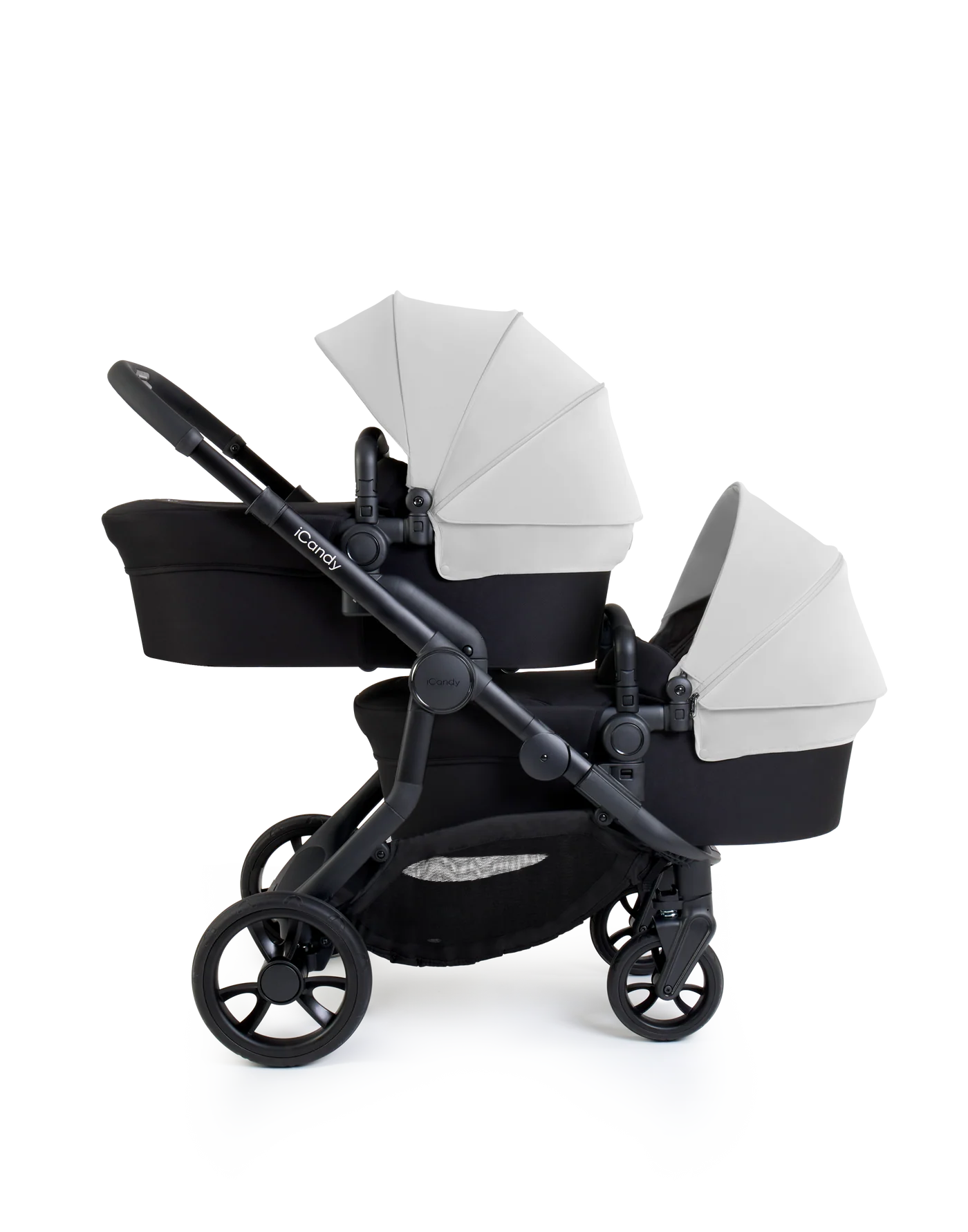
iCandy Orange 4
7.5/10 · 12.3kg · Tandem double · Ride-on board
- The horse and cart of the pushchair world — built for serious family duties
- Built-in ride-on board (rated to 20kg) — good in single mode
- 64L / 10kg basket with drainage vent
- Noticeably improved suspension over previous Orange models
- 12.3kg — lighter than the Donkey 6 by 3kg
- New for 2026 — early review, update pending
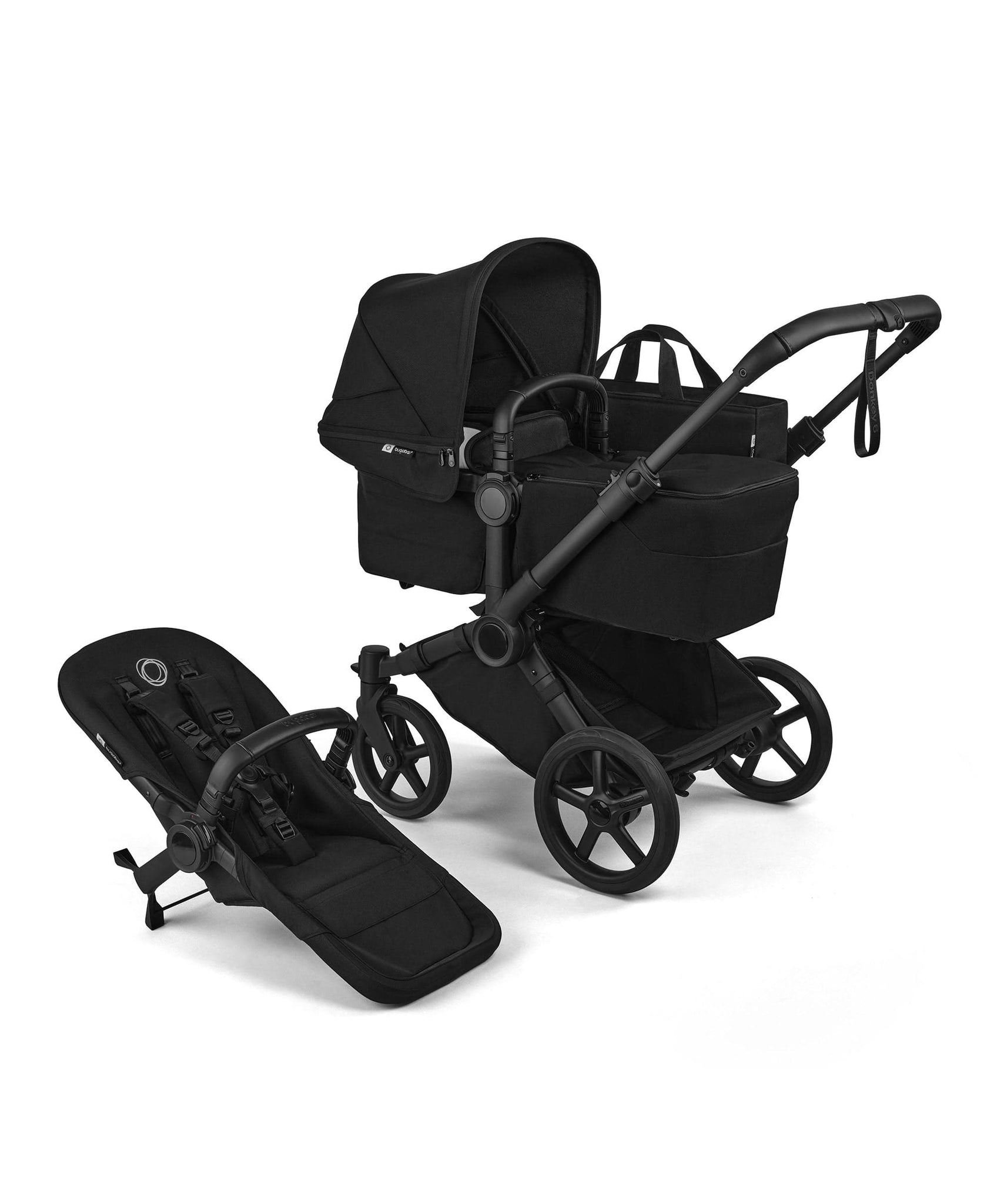
Bugaboo Donkey 6
8.5/10 · 15.3kg · Side-by-side double · Twins capable
- Single-to-side-by-side double in under 1 minute — three clips, press, slide
- Twins compatible from birth with two bassinets
- 15kg underseat basket plus side bag
- 74cm wide in double mode — designed to fit through many standard doorways, though tight entrances may need care
- Premium Bugaboo build quality throughout
- From £1,245 — firmly premium territory
The fundamental difference: tandem vs side-by-side
This is the comparison that matters before anything else. The Orange 4 is a tandem pushchair — one child sits in front of the other. The Donkey 6 is a side-by-side — both children sit next to each other. This isn’t a detail; it’s the entire character of the pushchair, and it affects everything from doorway clearance to sibling dynamics to how the pushchair handles.
Orange 4 — tandem inline
- Children sit one in front of the other
- Narrower footprint through doorways and shops
- Older child on the ride-on board in single mode — transitions naturally
- Ride-on board severely restricted in full double configuration
- Front child has less interaction with parent
Donkey 6 — side-by-side
- Children sit next to each other — both see everything equally
- 74cm wide in double mode — designed to fit through many standard doorways; tight or older entrances may need care
- Twins compatible from birth with two bassinets
- Both children equally accessible to parent
- Tighter shopping aisles become noticeable
Weight and daily practicality
The Orange 4 weighs 12.3kg. The Donkey 6 weighs 15.3kg. That 3kg difference sounds modest on paper but is meaningful when you’re loading into a car boot daily. Both are heavy pushchairs — there is no way around that — but the Orange 4 is the lighter tool for the same job.
The honest caveat applies to both: if lifting heavy items regularly is a physical constraint, neither of these is straightforward. But if you’re choosing between them on weight grounds, the Orange 4 wins that comparison clearly.
The ride-on board question
The Orange 4 has a built-in ride-on board rated to 20kg. The Donkey 6 does not include one. For families with a toddler who is sometimes too tired to walk but doesn’t need a full seat, the Orange 4’s board is a practical advantage — particularly in single configuration where a toddler can stand and ride while the baby is in the main seat.
The honest caveat: in full double configuration on the Orange 4, legroom for a standing toddler on the ride-on board becomes severely restricted — to the point where the board is effectively unusable in that setup. If full simultaneous double seating is your primary need, the ride-on board advantage largely disappears in practice.
Double conversion: how each works
We converted the Donkey 6 ourselves in-store: three clips, press a button, slide to expand the frame by 14cm, swap the side bag for a second seat. Once you’ve done it once, it’s one of the most straightforward double-conversion mechanisms we’ve used — under one minute, no tools, and once locked in it feels like a single-piece chassis rather than something that’s been extended. That mechanism is why the Donkey 6 earns its price — it has been tested and refined over multiple generations and holds up well in long-term use.
The Orange 4’s double configuration requires a separate tandem seat — children sit inline, one in front of the other. It’s a different conversion logic: you’re adding a seat rather than expanding the frame. For families who need to switch between single and double mode regularly, the Donkey 6’s one-minute expansion is the more seamless solution in daily use.
Storage and basket
The Donkey 6 has the more flexible storage arrangement: 15kg underseat basket plus a side bag that doubles as a changing bag. The Orange 4 has a 64-litre / 10kg basket with a drainage vent — which is a large single-basket capacity. Comparing them directly is non-trivial since one measures in litres and the other in kilograms plus a bag, but the Donkey 6’s dual-zone setup gives more options for families who carry a lot across different configurations.
Suspension and terrain
The Orange 4’s suspension is noticeably improved over previous Orange iterations — a real and meaningful upgrade on a model that previously drew criticism in this area. The Donkey 6 is a capable all-terrain pushchair, easier to steer than its size suggests, and handles kerbs and varied surfaces well. Both are capable on real-world terrain. Neither is the right answer if you need something lightweight for rough ground — the Bugaboo Fox 5 or our all-terrain guide is a better starting point for that conversation.
Which should you choose?
Choose the iCandy Orange 4 if:
- You want a ride-on board for a toddler in single/early double mode
- The 3kg weight saving matters to your daily routine
- An inline tandem layout suits your family configuration
- You want the newer model with improved suspension
Choose the Bugaboo Donkey 6 if:
- You need or want side-by-side seating for both children
- Twins capability is relevant — now or potentially
- You want one of the most seamless double-conversion mechanisms we’ve tested
- Outstanding storage across both modes is a priority
- Long-term proven mechanism matters more than the ride-on board
Frequently asked questions
The Orange 4 is a tandem pushchair — children sit one in front of the other — with a built-in ride-on board and lighter at 12.3kg. The Donkey 6 is a side-by-side double that expands from single in under one minute, is twins-compatible, and has a larger combined storage. The Donkey 6 is heavier at 15.3kg and scores 8.5/10 vs the Orange 4’s 7.5/10. The right choice depends on whether you need tandem or side-by-side seating.
The Bugaboo Donkey 6 supports a side-by-side twin configuration with two bassinets from birth and two seats as they grow. The Orange 4 is a tandem (inline) pushchair — verify directly with iCandy whether a from-birth twin tandem configuration is officially supported before buying for twins use.
The iCandy Orange 4 at 12.3kg, vs the Bugaboo Donkey 6 at 15.3kg — a 3kg difference that is meaningful in daily boot-loading. Both are heavy pushchairs in the context of the wider market.
Yes — the Orange 4 has a built-in ride-on board rated to 20kg, which works well with a child in the upper seat in single configuration. In full double mode with a lower seat attached, legroom becomes severely restricted and the board is effectively unusable. The Bugaboo Donkey 6 does not include a ride-on board.
Both score 8.5/10 and both convert to a double. The Peach 8 converts to an inline tandem, the Donkey 6 to a side-by-side. The Peach 8 leads on fabric quality and Lullaby Trust partnership carrycot; the Donkey 6 leads on storage and twins capability. Read our full Peach 8 vs Donkey 6 comparison for the full picture.
Also worth reading
- iCandy Orange 4 full review — in-store hands-on assessment, all specs and caveats
- Bugaboo Donkey 6 full review — in-store conversion mechanism tested
- iCandy Peach 8 vs Bugaboo Donkey 6 — the refined single-to-double alternative
- iCandy hub — all iCandy models reviewed and compared
- Bugaboo hub — all Bugaboo models reviewed and compared
- Choosing a Double Pushchair
- Best All-Terrain Pushchairs
📋 All iCandy reviews: iCandy hub →
📋 All Bugaboo reviews: Bugaboo hub →
About the reviewer
Mark founded MyPushchair.co.uk in 2006 after struggling to find honest, straightforward pushchair advice as a new dad. With more than 30 years in the family travel and leisure industry — and after returning to relaunch the UK’s original independent pushchair review site — he continues to test products with one aim: helping parents buy the right pushchair the first time. Janette contributes a female perspective to every hands-on assessment.
Mark Hartshorne · Founder, MyPushchair.co.uk · Read the full story →
Not sure which is right for your family? Get in touch — happy to help.