
This page contains affiliate links. If you click through and make a purchase we may earn a small commission at no extra cost to you. This does not affect our recommendations. Full disclosure policy →
Last updated: September 2026
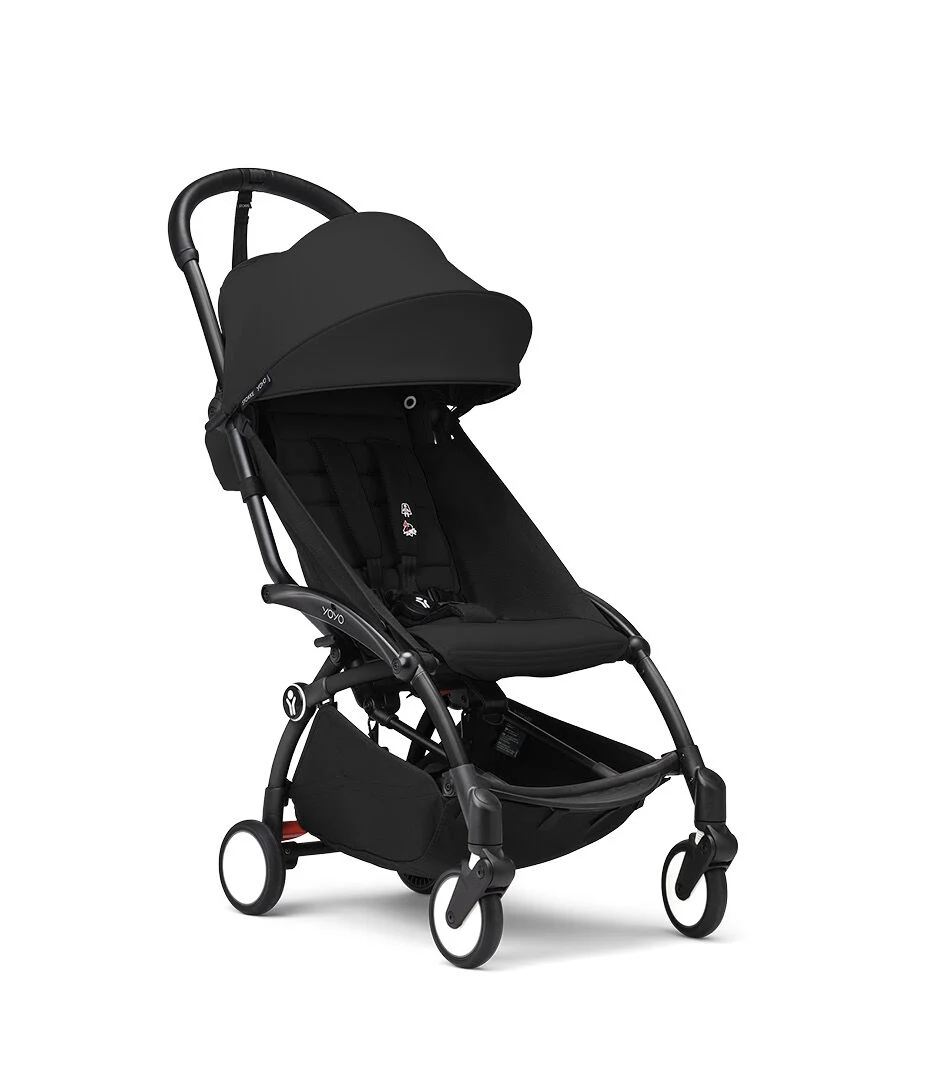
If you’re considering a secondhand YOYO or researching whether to upgrade, this page answers the question directly: what actually changed between the Babyzen YOYO2 and the Stokke YOYO³, and does it matter enough to affect your buying decision?
The short version
The YOYO³ is meaningfully better than the YOYO2 — improved suspension, better seat, updated canopy — but the YOYO2 at the right secondhand price is still a capable pushchair. The iconic compact dimensions and cabin approval are unchanged across both generations. If you’re buying new, buy the YOYO³. If you’re buying secondhand and the price is right, a well-kept YOYO2 remains good value.
The history — Babyzen to Stokke
The original Babyzen YOYO launched as one of the first widely adopted compact pushchairs designed around airline-cabin dimensions. It changed what travelling with a young child looked like — and created a category that every major pushchair brand has since tried to enter. The YOYO2 was Babyzen’s second-generation refinement of that original design.
In December 2021 Stokke acquired Babyzen — one of those rare corporate mergers that actually made sense. Stokke brought premium manufacturing standards and global distribution. Babyzen brought the iconic YOYO and its established market position. The resulting YOYO³, launched in summer 2024, is the first new generation of the pushchair released under Stokke ownership.
What actually changed — YOYO2 vs YOYO³
| Feature | Babyzen YOYO2 | Stokke YOYO³ |
|---|---|---|
| Suspension | Earlier-generation suspension | Improved 4-wheel soft drive system |
| Seat backrest | Lower backrest, no padded head cushion | Higher — with padded head cushion |
| Seat base | Non-perforated seat base | Perforated with breathable mesh |
| Seat recline | Previous-generation recline range | Up to 130° |
| Canopy | Previous-generation canopy design | Updated design |
| Basket capacity | 5kg | 10kg |
| Folded dimensions | 52 × 44 × 18cm | 52 × 44 × 18cm — unchanged |
| Weight | ~6.2kg | 6.2kg — unchanged |
| Cabin-size dimensions | 52 × 44 × 18cm — accepted as cabin baggage by many airlines, subject to individual airline rules | 52 × 44 × 18cm — accepted as cabin baggage by many airlines, subject to individual airline rules |
| Construction | Screws not rivets | Screws not rivets — unchanged |
Does it matter?
The improvements in the YOYO³ are real and meaningful — better suspension, a higher seat with head cushion, breathable seat base, improved recline. These aren’t cosmetic changes. A parent using the YOYO³ daily will notice the improved ride quality and the more comfortable seat for their child compared to the YOYO2. The 10kg basket allowance is also a meaningful practical upgrade over the YOYO2’s 5kg limit, particularly if this is your everyday pushchair rather than purely a travel stroller.
But the things that made the YOYO iconic are unchanged: the folded dimensions, the weight, the cabin-size format, the screws-not-rivets construction, the manoeuvrability. A well-kept YOYO2 at the right secondhand price is still a capable, ultra-lightweight compact pushchair that is accepted as cabin baggage by many airlines, subject to individual airline rules — it just doesn’t have the YOYO³’s improved suspension, seat comfort or larger basket allowance.
Should you buy a secondhand YOYO2 or hold out for a YOYO³?
Buy the secondhand YOYO2 if:
- The price is meaningfully lower than a secondhand YOYO³ or new YOYO³ frame
- The example is well-kept — check the fold mechanism, wheels and harness carefully
- Suspension improvement isn’t a priority for your use — mainly smooth urban pavements
- You want cabin-approved, ultra-lightweight travel at the best possible price
Hold out for the YOYO³ if:
- The price difference between YOYO2 and YOYO³ secondhand is small
- Suspension quality matters — you walk on varied surfaces and want the soft drive system
- Your child will be in the seat for extended periods and seat comfort matters
- You want the current model with the clearest compatibility with current Stokke accessories
💡 The simple rule on secondhand pricing
If a used YOYO2 is priced close to a used YOYO³, buy the YOYO³. The newer model is meaningfully better on suspension and seat comfort — the older one only makes sense when the saving is substantial enough to outweigh its age, wear and those improvements.
Should existing YOYO2 owners upgrade?
Probably not solely for the upgrades. The YOYO³ is the better pushchair — the suspension, seat height and breathable base are genuine improvements. But if your YOYO2 is functioning well and the core things you bought it for (compact dimensions, cabin approval, lightweight manoeuvrability) are still serving you, there’s no urgent case for upgrading. The fundamental YOYO proposition is unchanged across both generations.
The case for upgrading is stronger if suspension quality has become a frustration on your daily surfaces, or if your child is spending longer in the seat and comfort matters more than it did. In those situations the YOYO³’s improvements are relevant. Otherwise, a functioning YOYO2 is still a very good pushchair.
What to check when buying a secondhand YOYO2 or YOYO³
The YOYO’s screws-not-rivets construction means it holds up well and is repairable — a genuine advantage over pushchairs that can’t be easily maintained. When buying secondhand, check the fold mechanism carefully — this is the most used and most worn component. Check the wheels for wear and wobble. Check the harness for fraying. Make sure any accessories you need (leg rest, rain cover, car seat adaptors) are included — buying them separately adds cost quickly.
Read our full secondhand pushchair guide before buying — the YOYO is one of the better secondhand buys available, but the same inspection principles apply.
Affiliate links — we may earn a small commission if you buy, at no extra cost to you.
Related reading
- Stokke YOYO³ Review — full hands-on verdict, 9.5/10
- Stokke Pushchairs — Hub & Buying Guide
- Buying a Secondhand Pushchair — full inspection guide
- Best Pushchairs for Flying — how the YOYO³ compares with cabin-approved rivals
About the author
Mark founded MyPushchair.co.uk in 2006 after struggling to find honest, straightforward pushchair advice as a new dad. With more than 30 years in the family travel and leisure industry — and after returning to relaunch the UK’s original independent pushchair review site — he continues to test products with one aim: helping parents buy the right pushchair the first time. Read the full story →
Have a question about the YOYO2 vs YOYO³ decision? Get in touch — happy to help.